Kakamega Forest National Reserve Kenya: An Ancient Guinea Congolian Rainforest
The mysterious Kakamega Forest National Reserve Kenya, hidden in the heart of western Kenya is a living example of an ancient rainforest, home to rare species of animals, birds, whispering canopies and timeless mystery.
What is Kakamega Forest known for?
One of the many things to do in Kenya is visiting the Kakamega Forest. The Kakamega Forest Kenya is the last remaining forest of the ancient Guinea-Congo rainforest in Kenya. And you will be surprised to know that this unique ecosystem is found in Central Africa only.
Due to its incredible ecosystem, it is a rich biodiversity hotspot, sheltering rare wild species like colobus monkeys and De Brazza’s monkeys, birds like Great Blue Turaco and stunning butterflies, found only in this part of Kenya.
When you enter the forest, it will make you feel like you have entered a prehistoric jungle, lush greenery, dense vegetation, ancient towering trees, medicinal plants and vibrant orchids, creating a magical atmosphere, like the Hollywood movie, “Journey to the Center of the Earth, 2008.”
Near this mystical forest lives the Luhya people, who are the indigenous community of this region, known for their rich culture, spiritual practices and till date depend on the forests like the rare medicinal plants, like their ancestors did.
Kenya is home to many interesting destinations, so if you want to indulge in wildlife activities or explore its diverse landscape, don't miss to apply for Kenya eTA for Tourism activities.
Why is it called Kakamega Forest?
The name of the forest was given Kakamega by the Luhya indigenous community people, this word is a Luhya, spoken in western Kenya by the people.
The meaning of the word “Kakamega” is “Place of the Dead” or “Dense and Mysterious Forest.” This name was given by Luhya people because the forest was difficult to enter and it was all thick and dark inside.
According to the ancestors of the Luhya tribe, in the past the forest was more dense, had rare wildlife species, and unusual sounds came deeper from the jungle, creating a more mythical and sacred aura.
So the name Kakamega is not only about its physical appearance, but also reflects its cultural identity and mysteries surrounding it, making the people more curious.
Why is the Kakamega Forest important?
The Kakamega Forest Reserve is important because of the following interesting reasons, captivating the attention of visitors to explore the jungle.
- A rare ecological treasure: It is the last remaining forest of the ancient Guinea-Congo rainforest in Kenya consisting of a unique ecosystem that is found only in Central Africa.
- Rich biodiversity hotspot: It is a rich biodiversity hotspot, sheltering rare wild species like colobus monkeys and De Brazza’s monkeys, birds like Great Blue Turaco.
- Climate regulation: This forest protects from global warming by absorbing carbon dioxide, producing oxygen and helping to keep a balance in the local and regional climate.
- Water catchment area: The dense vegetation, trees and plants, protects the rivers and streams by preventing soil erosion, maintains the water cycle and supply of water to the nearby areas.
- Cultural and community value: Home to the Luhya people, who are the indigenous community of this region, known for their rich culture, spiritual practices, and till date depend on the forests for rare medicinal plants.
- Education and research: Kakamega Forest Reserve serves as an important center of learning for Scientists, professors and students to know about this tropical ecosystem.
What kind of trees are there in the Kakamega Forest?
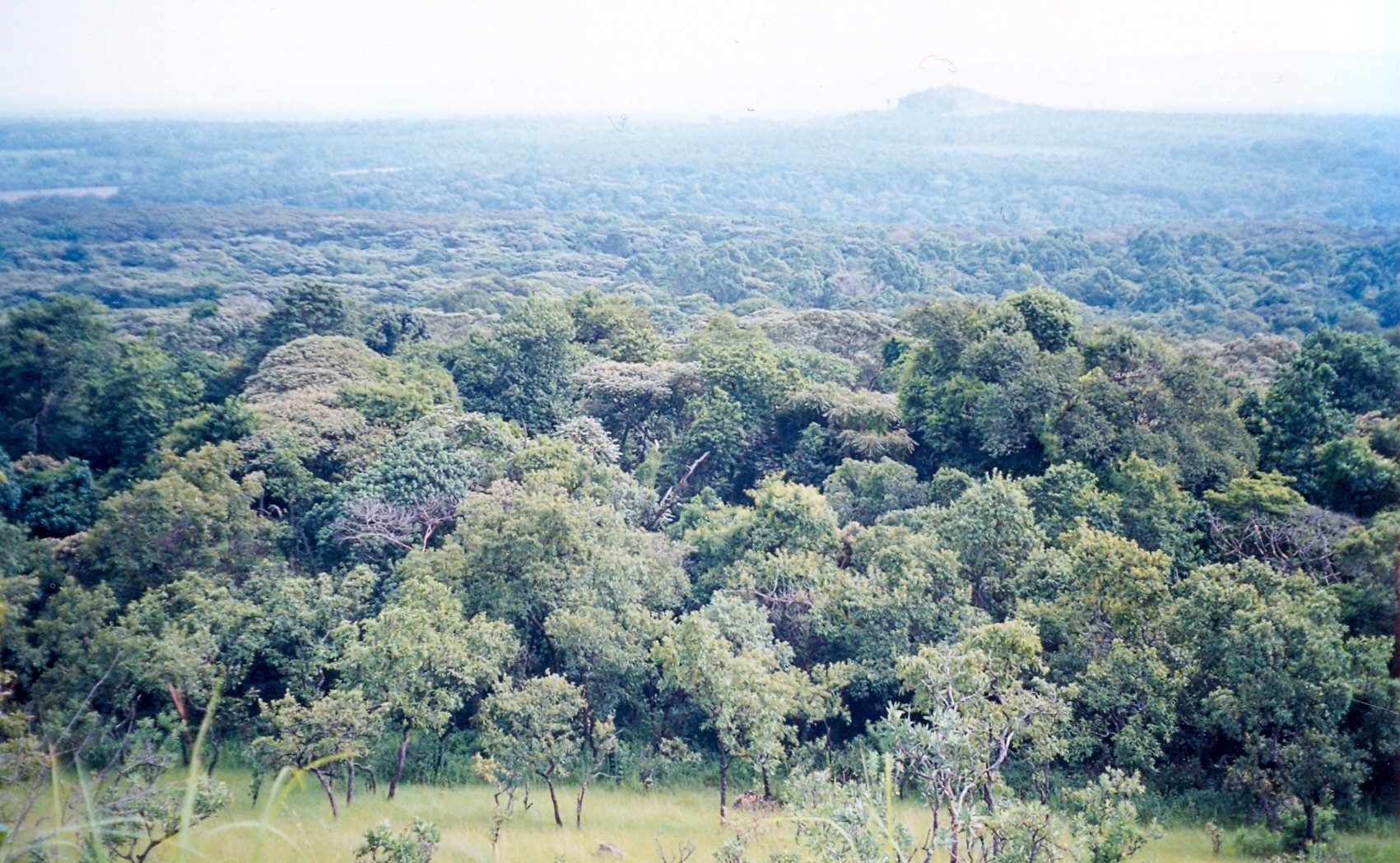
The Kakamega Forest Reserve has dense vegetation, ancient towering trees, medicinal plants and vibrant orchids, which are found only in this part of Kenya. When you step inside this tropical rainforest, the atmosphere surely feels like you have entered a prehistoric ancient forest.
Here is a list of some of the forest that are found in Kakamega Forest Reserve and how they are special:
- Hardwood trees: Some of the popular hardwood trees of Kakamega Forest are Elgon teak and East African mahogany, which are tall, long living and best for using as timber.
- Indigenous rainforest giants: Get amazed by the giant trees like Croton, Ficus (fig trees), and Albizia, which are tall and do not even let the sun enter with their thick canopies.
- Medicinal trees and plants: The Luhya people living near the Kakamega Forest Reserve know about the medicinal plants that this forest harbors.
- Unique and rare species: Since the Kakamega Forest Reserve is the last of the remaining ancient Guinea-Congo forest, it has prehistoric plant species not found elsewhere in Kenya, even in other places around the world.
- Understory vegetation: Beneath the tall trees of the Kakamega Forest Reserve are small trees, shrubs, bushes, ferns, and climbing plants, making the forest very dense.
What is the History of Kakamega Forest National Reserve?
Lets know about the interesting history of Kakamega Forest National Reserve that is deep rooted in both ancient, colonial and modern interference.
Ancient origins:
The Kakamega Forest Kenya located in Western Kenya is the last remaining forest of the ancient Guinea-Congo rainforest in Kenya. In ancient times, it stretched as far as Central Africa, and with time, caused by climate change, and is available only in this part of Kenya.
Early human connection:
The Kakamega Forest Kenya is home to the Luhya people, who are the indigenous community of this region, known for their rich culture, spiritual practices, and till date depend on the forests for food, and sourcing rare medicinal plants.
Colonial period:
Early in the 20th century, when Kenya was under the rule of the British, the Kakamega Forest came into focus of the government, and was controlled by them. Many acres of land of the forest were destroyed; countless tall trees were cut down for timber.
Protection and conservation:
So, in the late 20th century, the government recognized its ecological importance, and sections were set for the protection of the forests and the environment. Thus was designated as a National Reserve for the protection of the rainforest and its rich biodiversity.
Modern significance:
Since Kakamega Forest is a part of the ancient Guinea-Congo rainforest, it is now protected and conservation measures are taken for its rare biodiversity. This forest now solely is for conservation, tourism, education, and research
Myths and Legends Surrounding the Kakamega Forest Kenya
The Kakamega Forest Reserve is not only immersed in rich biodiversity, but is full of secrets and myths, which have been passed down for generations now by the Luhya community. Why not read some of the interesting ones.
1. The “crying stone” spirits:
The Luhya people living near the forest believe that spirits live in the forest and guard the sacred places. Spooky sounds at night like rustling of the leaves, the distant cries, and howling are said to be the voices of the spirits of the ancestors.
2. The mysterious forest dwellers:
There are even scary stories passed down by the ancestors that small, human-like creatures who are hard to catch delve in the deeper parts of the jungle. They act as the guardian of the jungle, are rarely seen and those who disturb them will be punished.
3. Disappearing paths:
The locals say that those who do not have respect for the forest, and enter, are sure to get lost in the forest. They believe the forest has a mind of its own, it shifts or vanishes the paths.
4. Sacred trees and forbidden areas:
Certain large, ancient trees are considered sacred. It is believed that cutting them or disturbing these areas can bring bad luck, illness, or misfortune.
5. Healing and mystical powers:
The forest is the dwelling ground of many rare medicinal plants, holding spiritual and healing powers. The ancient healers from the Luhya community, through guided rituals and knowledge from their ancestors, collect herbs from this forest.
6. Spirits of the past:
It is believed that the densely populated region of the interior parts of the jungle are the meeting point of the ancestors, a place for the physical and spiritual world.
What is the Kakamega Forest National Reserve Location?
The Kakamega Forest Reserve is hidden in the heart of western Kenya in Kakamega County, situated approximately around 50 km away from the city of Kisumu in the northern side, the neighboring country Uganda is not far away.
Geographically it is in the eastern side of Congo Basin forests, and sits at the Lake Victoria basin, for which the soil is rich and the region receives heavy rainfall, making it one of the most enriched tropical rainforests in Africa.
What are the Kakamega Forest activities you can indulge in?
Kakamega Forest Reserve is rich in biodiversity, home to some of the endangered plants and animals, there are many activities that visitors can indulge in, some of them are listed below:
Nature walks and forest hikes
The forest has many trails to explore, you can set on an adventure, from walking under the towering trees, their dense canopy, where sunlight never touches the ground to hidden streams.
Bird watching
Since the forest is rich in different species of plants, towering trees, shrubs and bushes, it is home to many different species of birds like Great Blue Turaco.
Wildlife viewing
The Kakamega Forest Reserve shelters rare wild species like colobus monkeys, bushbucks, and De Brazza’s monkeys.
Butterfly watching
Also, get mesmerised by the colorful butterflies, found only in this forest.
Visiting scenic viewpoints
Head to the top of Lirhanda Hill, one of the best viewpoints to watch the views of the jungle below.
Exploring waterfalls
The Isiukhu Falls is one of the hidden gems of Kakamega Forest Reserve with its amazing setting.
Camping
There are authorised campsites near the forest, you can spend a night there for a wild experience.
Cultural tours
Visit the local Luhya community village near the forest, learn about their culture, customs, traditional practices, their knowledge of making herbal medicine, and myths and tales.
Nature study and research
One of the most interesting places for students, professors and researchers to know about the region.
Photography
Those who love to take fascinating photos, capture the amazing scenery, wildlife, various plant species, birds and butterflies.
What are the Major attractions in Kakamega Forest National Reserve?
Since Kakamega Forest Reserve is a hotspot biodiversity, there are many places that visitors must definitely visit:
- Lirhanda Hill: The top of Lirhanda Hill is one of the best viewpoints to watch the views of the jungle below.
- Isiukhu Falls: The Isiukhu Falls is one of the hidden gems of Kakamega Forest Reserve with its amazing setting.
- Crying Stone (Magholo): According to the local myths, the sounds coming from these rock formations are said to be the weeping spirits of the ancestors.
- Nature Trails: The most popular nature trails are Main Kakamega Trail (leads to diverse trees, monkeys and birds), and Emilayi Trail (a quiet trail leading to trees, shrubs and bushes).
- Butterfly Zones: Get mesmerised by the colorful butterflies, found only in this forest.
- Birdwatching Spots: Since the forest is rich in different species of plants, towering trees, shrubs and bushes, it is home to many different species of birds like Great Blue Turaco.
- Yala River: This river is rich in biodiversity, keeps the soil rich, and has scenic spots to admire the surrounding wilderness.
- Cultural Heritage Sites: Take guided tours, visit the local Luhya community villages near the forest, learn about their culture, customs, traditional practices, their knowledge of making herbal medicine, and myths and tales.
What is the Kakamega Forest National Reserve Kenya entrance fee?
According to the current (2025–2026) rules set by the Kenya Wildlife Service, the he Kakamega Forest Reserve Entrance charges are:
East African citizens (including Kenyans)
- For Adults: Around KES 500 per person
- For Children: Around KES 250 per child.
Kenya residents (non‑East African):
- For Adults: Around KES 675 per adult
- For Children: Around KES 350 per child.
Foreign non‑resident visitors:
- For Adults: Around USD 50 per adult
- For Children: Around USD 25 per child.
Where to stay at Kakamega Forest National Reserve?
Here are some of the Kakamega Forest accommodation options that visitors can consider when visiting the Kakamega Forest Reserve:
Close to the Forest: Rondo Retreat Centre, Isecheno Blue Shouldered Guest House, Isukuti Guest House, Isecheno Camping Site & KEEP Bandas, Community Home‑stay Experiences
In Kakamega Town (around 18 km from Kakamega Forest): Kusi hotel Kakamega, Place Caravan Hotel, Lamanis Haven, Petrichor House Kakamega, Tulivu Suites, Jasiri Cottage- Kakamega.
Mid‑range stay option near the Forest: Villa Martis Hotel
Resort accommodation with good reviews: Amanda Resort
Other budget‑friendly hotel options: Baaz Hotel, SKYZ9 HOTEL KAKAMEGA, and Milimani Resort Kakamega
Slightly Luxury Stays: Logmma Regency Hotel and Grand Turaco Hotel
Traditional hotels with local touch: Jamindas Paradise Motel-Kakamega and Friends Hotel Kakamega.
Nearby Apartment‑style stay option: Musundi Luxury Homes (Apartment‑style stay)
Nearby Eco‑friendly stay option: Olukulu Guest House and Eco-village
Kakamega Forest camping
Kakamega Forest Eco-Lodges & Campsites, Community Campsites (managed by the local travel guides or community groups), Self-camping (allowed only on getting permission from Kenya Forest Service)
How to Reach Kakamega Forest National Reserve Kenya?
Travelers wishing to visit Kakamega Forest National Reserve can easily do so by road or flight.
By Road
From Nairobi
- The Kakamega Forest Kenya is around 360 km away from Nairobi, the capital city of Kenya, and will take around 6 to 7 hours to reach.
- If traveling by road you will have to head towards A104/ Nairobi-Nakuru Highway, in the northwest direction.
- You will have to continue your journey through Naivasha → Nakuru → Eldoret
- When you reach C56, take a turn towards Webuye town, which will lead all the way to Kakamega town
- Follow the sign to Kakamega Forest Reserve
- The forest entrance gates are Buyangu, Isecheno and Kisere.
From Kisumu
- The Kakamega Forest Kenya is around 70 km away from Kisumu, and will take around 1.5 to 2 hours to reach.
- you will have to head towards A1/ Nairobi-Kisumu road, in the north direction.
- When you reach Kakamega town, take a turn towards Kakamega-Kisumu road, which will lead all the way to Kakamega Forest gates.
By Flight + Road
Fly to Kisumu International Airport
From Jomo Kenyatta International Airport in Nairobi take a flight to Kisumu International Airport, which will take only one hour to reach.
From Kisumu Airport to Kakamega Forest
Once you reach Kisumu International Airport, you can rent a car or taxi to reach Kakamega town, which will take around 1.5 to 2 hours.
Kisumu - Kakamega town - Forest gate
What is the Best Time to Visit Kakamega Forest Reserve Kenya?
The best time to visit Kakamega Forest Reserve Kenya is during the dry season, when you can enjoy exploring the forest and indulge in outdoor activities.
Here’s a breakdown:
Dry Seasons (designated as the best time to visit)
- January to March: Dry season for short time
- July to October: Dry season for long time
Benefits: Visitors can indulge in adventurous activities like hiking and trekking, enjoy bird watching and close encounters with the primates. Also, during these months, the roads are well kept, they are not muddy and the trail to the waterfall is easily accessible.
Rainy Seasons
- April to June: Long rainy days with heavy rainfall.
- November to December: Short rainy days.
Pros: The forest is lush green and looks refreshing
Cons: The road will be muddy and the trail to the waterfall may not be accessible.
Kakamega Forest National Reserve Kenya FAQs
What type of animals are found in Kakamega Forest Kenya?
The different types of animals found in Kakamega Forest National Reserve, Kenya include, colobus monkeys, bushbucks, De Brazza’s monkeys, duikers, different species of birds like Great Blue Turaco, butterflies and small forest animals.
What is unique about Kakamega Forest Kenya?
The most unique part about Kakamega Forest National Reserve, Kenya is that it is a prehistoric jungle, its incredible ecosystem is home to rich biodiversity, sheltering rare wild species and plants.
How Old is Kakamega Forest Kenya?
The Kakamega Forest National Reserve, Kenya is estimated to be around 20 million years old, it is the last remaining prehistoric ancient tropical rainforest found in Africa only.
Is Kakamega Forest Kenya good for hiking?
Yes Kakamega Forest Reserve Kenya is good for hiking, some of the popular trails include Main Kakamega Trail and Emilayi Trail.
If you have any plans to enter Kenya for tourism or to transit, simply go for this hassle-free visa application process. But before that Check your eligibility for Kenya eTA and apply for Online Kenya Visa 4 days in advance of your flight.