Lake Turkana and the No Return Island in Kenya: Its Myths and Legends
Kenya is a land of wonder and mystery, home to legendary sites like Lake Turkana and the Island of No Return in Kenya, steeped in local myths and legends. Discovering these mystical places in Kenya is an extraordinary experience.
Did you know?
Hidden within the remote deserts of northern Kenya is Lake Turkana which is the largest permanent desert lake in the world. Its striking haunting beauty, glittering jade green waters and rare wildlife, captivates the interest of the visitors. The green waters of the lake are enriching making it the thriving habitat of the crocodiles, exotic fishes and many bird species.
Nestled within the vast jade-green waters of this Lake is the mysterious Island of No Return, shrouded in eerie legends and unanswered questions, ensuring curious visitors have ground breaking experiences. Locals call it the Envaitenet Island, meaning NO RETURN, hence the name.
There's a local story circulating, those who ventured into the No Return Island, never came back alive. Being an important archaeological site immersed in such mysteries, this island has been fascinating many explorers, scientists, and storytellers for ages now.
Travelers are now eager to discover the secrets of the intriguing and enigmatic landscapes of this island. Are you one of those curious travelers? Ready to take on the lead? But before that, brainstorm yourself with some of the information related to this Lake and its island. And don't miss to obtain your Kenya eTA for Tourism activities to explore the best of Kenya.
Where is Lake Turkana located?
Lake Turkana is the largest permanent desert lake in the world, located in the remote deserts of northern Kenya within the Great Rift Valley. The lake mainly lies in Kenya amidst the arid desert landscapes, but its northern side extends a bit towards Ethiopia. Due to its jade-green waters, it is nicknamed as “Jade Sea”
Within the jade-green waters of Lake Turkana, the mysterious Island of No Return is located, which is one of the small isolated islands of this lake. As the Island of No Return is located in a remote area, making access to the island nearly impossible, these reasons may be some of the contributing factors related to the stories and mysteries surrounding it.
Which countries share Lake Turkana?
Lake Turkana is located in the remote deserts of northern Kenya within the Great Rift Valley. It is shared by Kenya and Ethiopia, and most of the part is located in Kenya.
- Kenya: Around 90% of Lake Turkana lies in northern Kenya.
- Ethiopia: Northern side of Lake Turkana extends a bit towards Ethiopia
What is Lake Turkana famous for?
Lake Turkana is famous for many reasons, making it a captivating destination to explore.
- Lake Turkana is the largest permanent desert lake in the world, located in the remote deserts of northern Kenya within the Great Rift Valley.
- Due to its jade-green waters, it is nicknamed as “Jade Sea”
- The green waters of the lake are enriching making it the thriving habitat of the Nile crocodiles, exotic fishes and many bird species.
- It is in fact the largest crocodile habitats in the world
- An important archaeological site, as the earliest human fossils were found around the lake.
- Due to its fascinating natural beauty and rich wildlife, Lake Turkana National Park is protected as a UNESCO World Heritage Site.
- The mysterious Island of No Return is located within the waters of Lake Turkana, which is one of the small isolated islands of this lake.
What is the Island of No Return in Kenya?
Within the jade green waters of Lake Turkana the mysterious Island of No Return is located, which is one of the small isolated islands of this lake. There's a local story circulating, those who ventured into the No Return Island, never came back. Hence the locals named the island Envaitenet Island, meaning NO RETURN.
These myths and stories have been passed down through generations among communities living around the lake. As the Island of No Return is located in a remote area, has harsh climatic environment, dangerous wildlife, and ancient ritual sites, some researchers believe that these reasons may be some of the contributing factors related to the stories and mysteries surrounding it. Inviting many explorers, historians, scientists, and storytellers to uncover its secrets.
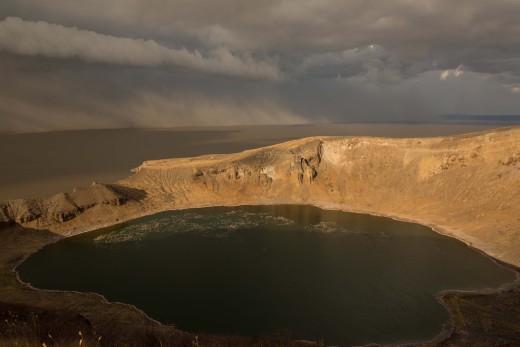
Image Source: https://commons.wikimedia.org/wiki/File:Lake_Turkana_National_Park.jpg
Lake Turkana history: Travel back to time
The geological history of Lake Turkana stretches back millions of years, let's check out its timeline in brief.
Formed by geological movements in the Great Rift Valley
This lake is located within the Great Rift Valley, according to geologists, this lake was formed by the geological movements that occurred in the Great Rift Valley. With the passage of time deep valleys, and basins were created. The present day Lake Turkana was a basin, over time, rivers filled this basin and the lake was formed.
Early Human Fossils Discovered here
This lake is also an important archaeological site for studying evolution of humans. In fact human fossils were discovered near the lake, scientists were able to understand the evolution of human beings. One of the popular fossil sites is Koobi Fora, where remains of early human ancestors were found.
Home to the local Turkana people
The local communities living here are referred to as Turkana, they have been living near the lake for centuries now, relying on fishing and livestock for a living.
Previously it was called Lake Rudolf
This lake was discovered by European explorers, one of the explorers called Samuel Teleki, named Lake Rudolf in 1888 after the Crown Prince Rudolf. When Kenya gained its independence, it was renamed Lake Turkana.
Recognized by UNESCO:
Because of its natural and archaeological importance, the lake is protected and is part of the Lake Turkana National Parks, which is recognized as a UNESCO site.
Myths and Legends surrounding Lake Turkana
Lake Turkana is not only the largest permanent desert lake in the world, but the region is shrouded in eerie legends and local folklore. These myths and folklores have been passed down from generations now by different indigenous communities living near the lake like the Turkana, Dassanach, and Rendille peoples.
You too are curious, right? We have listed some of the prominent myths and legends surrounding this lake, alluring the attention of the explorers, historians, scientists, and storytellers to uncover its secrets.
The Lake as a Living Being
According to the local myths, they describe Lake Turkana as a living being, whose mood affects those who are living near it. Sudden storms or floods in the area are a way of expressing anger and displeasure. Even fishermens, before they go fishing in the lake, they make offerings in a traditional way, to make sure that they return safely and catch plenty of fishes.
The Legend of Central Island
The lake has many remote islands, one of the central islands of the lake is considered to be sacred by the local communities. As per the local folklore, the island is guarded by the spirits, anybody disturbing it or disrespecting, may face misfortunes, such as illness or poor harvests.
The Disappearing People
There is a legend that centuries ago, an entire village vanished into the lake. Local storytellers say that the villagers living near the lake refused to pay honor to the spirits of the water, causing anger. As a punishment, the entire village was swallowed overnight, no person escaped. Some locals claim, if you venture near the lake at night you can hear the cries of those people and even see ghostly figures. Spooky right?
The Nile Connection
Local communities believe that in the past, Lake Turkana was part of the River Nile, sharing its water to distant lands. This myth reflects that even in ancient times people had an understanding of water routes.
Monstrous Creatures
Lake Turkana is believed to be the home of many aquatic creatures, some legends describe that in the deep waters of the lake, enormous fishes and serpent-like beings live. Inexperienced fishermen and children are not allowed to venture out in the deep waters or cause any disrespect to the lake.
Rainbow Spirits
There is a myth circulating for generations now, among the local communities living near the lake, that there are Rainbow spirits. If they see rainbows over Lake Turkana at certain times of the year, it is believed that it is a sign from their ancestors' spirits foretelling them whether it will be a good fishing season or about a coming storm.
Myths and Legends of No Return Island in Kenya
The mystical Island of No Return in Kenya is located within the waters of Lake Turkana, which is one of the small isolated islands of the lakes Central Island area. It is one of the top things to do in Kenya, as it is immersed in myths and local folklore, thrill seekers should definitely find out what this spooky island holds.
1. The Island of No Return
The locals called this island Envaitenet Island, which means “No Return”, and sometimes Island of the Dead because of the myths related to it. According to local folklore, it is believed the spirits of ancestors inhabit this land, causing a sense of mystery among the visitors.
2. Sacred Burial Grounds
Some myths suggest that the Island of No Return in Kenya was used as a burial ground for the chiefs of the villages and important community members, making it a sacred site. Those who visit the place and disturb the spirits would anger them, which could lead to misfortunes, disease, or death.
3. Spirits of Lake Turkana
Local communities believe that the island is protected by the water spirits of Lake Turkana. Those who try to visit the island of no return are believed to be dragged into the lake. Even the local fishermen avoid fishing this part of the lake.
4. Connection to Disappearances
There have been stories that people who tried to venture into the island, disappeared mysteriously. Although these tales may have been exaggerated, it has raised curiosity in the minds of the people, and they are eager to find out for real.
In fact, in 1935 a group of British explorers Sir Vivian Fuchs, Martin Shefils and Bill Dayson entered the island and never came back. The reason is still unknown.
5. Cultural Respect and Fear
The stories and myths related to Island of No Return in Kenya, may be to encourage people to respect the sacred sites of their ancestors and the natural environment.
What is the climate in Lake Turkana?
Lake Turkana is located in the remote desert of northern Kenya, experiencing arid and hot desert climate. Visitors can expect:
High Temperatures: In the daytime the temperature exceeds 35°C (95°F), while nights are cooler.
Low Rainfall: It receives less than 300 mm (12 inches), which is why the region is dry.
Strong Winds: The region is accompanied by consistent strong winds.
Evaporation Rates: Due to high evaporation rate the water in the lake is saline.
Seasonal Variations: The region has two short rainy seasons, i.e. from March to May and from October to December, with limited rainfall.
What is the best time to visit Lake Turkana and island of no return in Kenya?
The best time to Lake Turkana and the Island of No Return is during the dry season, that is from January to March when the region experiences cool climate.
- January to March: Dry season, the region experiences cool climate.
- July to September: A bit cooler with clear skies.
- Rainy seasons: The region has two short rainy seasons, i.e. from March to May and from October to December, with limited rainfall. However, do check the weather forecast, sometimes heavy rainfall could cause disruptions.
How to reach Lake Turkana and island of no return in Kenya?
Lake Turkana and the Island of No Return in Kenya are situated in a remote location, so visiting them requires detailed guidance and you will have to take the help of the local tour operators. Here’s how you can reach:
By Air
- From Nairobi Airport or Eldoret Airport take a flight to Lodwar Airport, the main gateway to Lake Turkana.
- Once you reach Lodwar Airport, you can opt for Charter small planes or helicopters which will drop you at the island shores.
By Road
- From Lodwar or any nearby town, take a 4×4 vehicle to reach local villages of Lake Turkana.
- During the rainy season, the road gets muddy
- Be ready for a long drive, passing through arid desert landscapes.
By Boat
- To reach the Island of No Return in Kenya, visitors will have to take a boat from a local fisherman on Lake Turkana, which is the only access to the island.
- The boat ride through the rough waters would be challenging, as the waters are home to crocodiles, accompanied by strong winds.
Safety Tips
- Strongly Recommended to take local guides who are familiar with the region to visit Lake Turkana and the Island of No Return in Kenya.
- Carry with you plenty of water, sun protection, mosquito repellents and emergency supplies.
- Medical facilities are limited, as it is a remote area, plan carefully.
People may also want to know
How deep is Lake Turkana?
You will be surprised to know that Lake Lake Turkana shallow desert lake, it has a:
- Maximum Depth: At its deepest point it is 109 meters (358 feet).
- Average Depth: 30-50 meters (98-164 feet).
- Volume: Approx 203 cubic km.
Can you swim in Lake Turkana?
Technically, you can swim in Lake Turkana, but doing so could be risky due to some of the following reasons:
- Nile Crocodiles: It is in fact the largest crocodile habitats in the world
- Hippos: They live in the shallow areas of the shore, due to their aggressive nature, it is suggested not to go near them.
- Strong Winds & Currents: Waters are rough accompanied with strong winds, swimming could be risky here.
- High Salinity & Temperature: The water could be harsh for the skin and eyes.
- Remote Location: Medical facilities are limited, as it is a remote area, you are recommended to plan carefully.
READ MORE:
Tsavo National Park is the largest national park in Kenya, famed for its dramatic landscape, wildlife and rich biodiversity. Located in the southeastern part of Kenya, this wildlife park comprises Tsavo East and Tsavo West.
If you have any plans to enter Kenya for tourism, business or to transit, simply go for this hassle-free visa application process. But before that Check your eligibility for Kenya eTA and apply for Online Kenya Visa 4 days in advance of your flight.